
Paid ads
HVAC Google Ads for Heating and Cooling Companies
HVAC Google Ads for US heating and cooling companies. Split repair, replacement, and maintenance, and match each HVAC search ad to a page a person answers.
//CodeHunterz
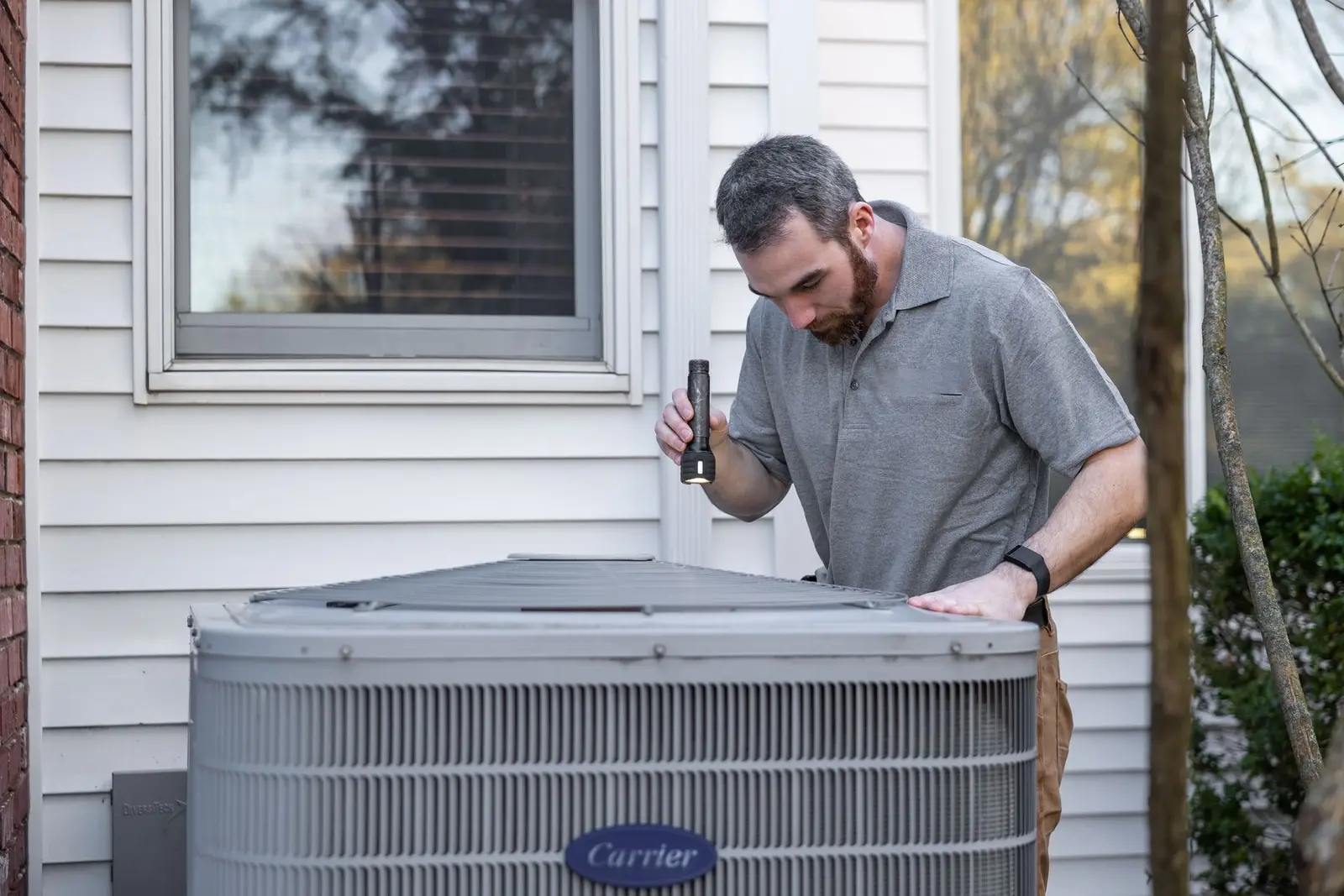
HVAC Google Ads pay off only when the click matches a job the trucks can do. Google Ads for HVAC companies are not one job. No cooling, no heat, a system ready for replacement, and a maintenance plan are four different conversations. They peak at different times of year. They need different pages. And none of them survive a phone that nobody answers.
The industry setup lives on HVAC Google Ads. The unpaid companion, the pages and the profile, is HVAC SEO. Account work in general is Google Ads management. If the account is new, the order of operations is the beginner guide to Google Ads. If you are choosing between lead ads and classic search, read Local Services Ads vs Google Search ads before you turn both on out of habit. A written estimate starts on the contact form.
HVAC Google Ads split no-cool and no-heat
A person who types that the air conditioner is not cooling wants a repair visit, often the same day. A person who types that they need a new furnace is comparing a replacement. A person who types a maintenance plan is not standing in a hot hallway. Those three should not share one ad and one page. The words, the hours, and the destination all change.
Write the ads in the words the customer already used. No cool and no heat are how people search when the house is uncomfortable. A slogan about comfort can wait. Include the area you serve. Include a limit when it will save a bad roll: window units if you do not service them, rooftop commercial units if you do not, brands you refuse, new construction if you only do service. The ad is allowed to be specific. Specific is how you avoid the click you cannot fulfill.
Match types should start tighter than a new account wants. Phrase and exact on the symptom plus the city, or on the symptom plus "near me" if you have confirmed the location settings. Broad match can come later, after negatives exist and after you have seen which terms become tickets. Starting broad, with no history, is how the budget finds students and parts shoppers.
Repair, replacement, and maintenance
Give repair, replacement, and maintenance their own campaigns, or at minimum their own ad groups and their own URLs. Repair gets a fast path: the phone number, the hours, the area, and what the caller should expect. You can mention a safe check a homeowner can do, such as confirming the thermostat is set to cool and that the filter is not packed solid, without pretending to diagnose the system from a webpage. Replacement gets a page about the visit: what the technician looks at, what the homeowner should have ready, and financing only when a real lender and real terms exist. Maintenance gets a page that lists what the plan includes, what costs extra, and how someone signs up.
Do not let a rebate or a tune-up special hijack the repair ad. The person with no cooling did not ask for a promotion. They asked for a working system. Send them to the repair page. Mention the plan after the repair is booked, when a person can explain it.
HVAC search ads follow the season you can staff
Cooling calls bunch up when the weather is hot. Heating calls bunch up when it is cold. The weeks in between are when maintenance and replacement quotes are easier to put on the board. You do not need a national story about how large the swing is. Watch your own board. If you cannot add trucks, a larger ad budget only buys calls you will miss, and missed calls become the next company's tickets.
Move money toward the season you can fulfill. Shrink or pause cooling-repair ads when you are not offering cooling repair. A winter ad for no cooling can still catch a strange case, but it should not keep a summer daily budget in a climate where that search goes quiet. The reverse is true for heat in a market that barely uses it. Maintenance can run when dispatch has room to honor the visits. If the plan includes two visits a year, do not advertise a third you will not schedule.
Hours are part of the same decision. Run ads when someone answers. If the on-call technician stops at a set time, the ads should stop then, or the page should say plainly that after that hour the call is returned in the morning. Paying for overnight clicks into a voicemail box is a setting. It is not bad luck.
Negatives for jobs, do-it-yourself queries, and training
The search terms report will try to spend on people who are not customers. Read it every week while the season is busy. The categories repeat.
Jobs and careers show up as hiring, apprentice, salary, and "HVAC jobs." Those people want work. Send them to a careers link in the menu if you are hiring. Do not buy the click.
Do-it-yourself queries show up as "how to," part numbers, and repair videos. If you do not sell parts to the public, negative them. If a how-to search occasionally hides a person who has already failed and now wants a technician, listen to a few calls before you block the whole pattern. Do not assume. Check.
Training queries are schools, certifications, test prep, and course names. They are real demand for education. They are not demand for a service call.
Other equipment belongs in negatives when you do not touch it: certain boilers, geothermal, commercial refrigeration, brands you will not warranty, window units. Other cities belong there too, as soon as they appear. A copied negative list from another company will miss your market and will sometimes block a job you wanted. Start from your terms. Add the obvious categories on day one so the first week is not tuition.
A weekly pass on search terms
Read the terms. Keep the ones that match a service you sell. Negative the ones that do not. Mark the ones you are unsure about and listen to the calls, or read the form notes, before you block them. A strange phrase that booked a replacement is not waste. A normal-looking phrase that produced students is. Write the decision down so the next week does not relitigate it.
Shared negative lists help once you have more than one campaign. Jobs, training, and out-of-area cities can sit on a list every campaign uses. Equipment you refuse can sit there too. Keep repair-only limits off the replacement campaign if replacement should still match those terms. A shared list that is too aggressive will silence a campaign you meant to grow.
The landing page has to match the HVAC search ad
An ad about no cooling in your service area should open a page about cooling repair in that area. Not the homepage. Not the maintenance plan. Not a replacement rebate you hope to steer. The visitor is uncomfortable. The page should show the phone number, the hours, the area, and what happens on the call: a dispatcher, a window, an on-call technician, whatever is actually true. If the next step is a request that a person confirms, say "request" and not "booked."
Replacement ads go to a replacement page that explains the visit. Do not print an equipment price for a house the technician has not seen. If a lender has approved a promotion, put the terms where they can be read, including who the lender is and that approval is not automatic. A monthly payment invented for the ad is a price you did not earn. Leave it off.
Maintenance ads go to the plan page. Visits per year, what is inspected, what is billed extra, and how to join. When a special ends, pause the ad the same day. An expired offer is a broken ad even if the keywords are perfect.
The page has to work on a phone. A call button the size of a thumb, a page that loads, and no video sitting on top of the number. The same pages earn their keep when the click is unpaid. That is the point of HVAC SEO: the ad rents the visit, and the page has to deserve it either way. The longer organic version is SEO for HVAC companies.
Answer the phone or the HVAC Google Ads click is wasted
Call answering is part of the campaign. If ads run during hours when the phone hits voicemail, the account is buying misses. Staff the hours you advertise. If after-hours coverage is an answering service or a technician on call, the page should say so, and someone has to return the call when they said they would. Software on the number, if you use it, still needs your jobs and your safety transfers: an AI receptionist for HVAC companies. A recorded greeting that promises a callback nobody makes will show up in reviews, not in revenue.
Track calls from ads apart from calls that come from the profile and from the rest of the site. You need to know which spend produced which conversation. A click is not a lead. A call that lasts a couple of seconds may be a misdial or a pocket dial. Define a useful call in plain language for your own report: a person in the service area who wants a service you offer. Then review a sample of those calls. The definition keeps the report honest. It is not a promise that every useful call becomes a ticket on the board.
Speed matters most on no-cool and no-heat. Those callers phone the next company. A form with no phone number, on an emergency query, is a mismatch unless a person sees the form immediately and calls back. Even then, show the number. The person who will not wait will not fill the form.
Local Services Ads are a different product from HVAC search ads
Local Services Ads are not a campaign type you toggle inside a normal search campaign. For eligible HVAC businesses they can appear in their own unit, often above the map, using the business reviews, and they charge per lead under that product's rules. Screening is part of eligibility. You do not steer them with a keyword list. You do keep the profile accurate, you do respond to reviews, and you do dispute leads that fall outside the rules Google publishes for that product.
HVAC search ads are the campaigns where you choose queries, negatives, schedules, and the page, and you pay per click. Both products can run for the same company. They are not duplicates. A report that dumps both into one lead total will take credit twice when the same customer saw both, and it will hide which one is producing junk.
Eligibility is not universal. If your category or your area is outside the program, search is the product you can buy. The comparison, including how billing and disputes differ, is Local Services Ads vs Google Search ads. Whichever you run, the account should sit in the company's name. An agency can have access. The history should stay with you if the relationship ends.
What not to merge when you report
Keep separate lines when more than one source exists: Local Services Ads leads, search calls and forms, and calls from the map or the organic site. A strong month might be any one of those. A confusing month is usually a sheet that labels all of them as ads. Owners make budget decisions from that sheet. If the labels are wrong, the decision is wrong, and the next season's spend follows the error.
HVAC Google Ads management follows the board
Spend enough on one intent to learn something. A small budget split across repair, replacement, maintenance, and several cities will not show you which query is worth a truck. Start with the job you want more of and can staff this month. Add the next job when the first has clean search terms and answered calls. Cities can be added the same way: the ones you already serve well, then the edge of the area if the drive still makes sense.
The Growth plan starts at $2,400 per month after a 20% launch offer (regular starting price $3,000 per month). Ad spend is paid to Google and is a separate amount. This article does not name a media budget. Limited-time launch offer, final quote after free strategy call. The useful number depends on your area, how many of the calls you can take, and what happens after the call. We also do not promise a cost per lead or a count of system installs. Those figures are outcomes. They are not a line we can sign.
When the board is full, the right move can be to lower spend. Ask, before you hire help, how the management fee behaves in a slow month. A fee that only works if you spend more is a poor fit for a trade whose demand moves with the weather. The public notes on how fees and media budgets get blended are in agency pricing explained. HVAC Google Ads management is that fee. It is not the invoice Google sends.
Google Ads for heating and cooling repair companies in the US
Google Ads for heating and cooling repair companies in the United States should describe the area a truck will actually enter. A national list looks thorough and then buys a call from a state you do not serve, a county you will not cross, or a climate where the season you advertised is not the season they are having. Write the cities and the distance in the same words dispatch uses. If the website, the Google Business Profile, and the ads disagree, fix that before you raise the budget.
Google Ads for HVAC companies that serve one metro should say that metro in the ad and on the page. A company with two shops should not share one radius if the drive time is different. The click is only useful if the person who answers can book a job in that place, on that day. HVAC search ads do not fix a service area the trucks will not drive.
If the office also needs software on a PC for dispatch or files, that is a different quote: custom desktop software development. Firms buying clicks for matters, rather than service calls, can compare the structure on Google Ads for lawyers. Neither of those pages is a substitute for this one.
Brands, financing, and the offers you can keep
Name brands in an ad only when you service them and the landing page says so. A headline packed with every manufacturer looks like a parts counter. If you are an authorized dealer for one line, you may say so when the agreement allows the claim. Do not borrow a logo the agreement does not cover.
Financing follows the same rule as replacement pricing. The ad can say that financing is available through a named partner. The page can link to that partner's disclosure. The ad should not invent a payment. Maintenance specials follow it too. Advertise a tune-up price only when that price and those inclusions are real this week. Pause the ad when the special ends, even if the keyword still has traffic. Traffic to a dead offer is a complaint waiting for a form.
Service area copy belongs in the ad and on the page in the same words dispatch uses. If you will not cross a county line, do not buy that county. When those searches appear, negative them. A cheap click from a town you decline is not cheap after the phone time.
A simple HVAC Google Ads account
One campaign for cooling repair, one for heating repair, one for replacement, and one for maintenance, if you sell all four. Fewer if you do not. Each one uses the cities or the distance you actually drive, a shared negative list for jobs, training, and do-it-yourself queries, and a schedule that matches the phone.
Ads name the symptom and the area. Pages repeat them. Call reporting is something you can open and explain. In season, someone reads search terms every week. Out of season, someone still reads them before the weather turns, so the account is not full of last year's waste when the first hot or cold week arrives.
That is the machine. Extra features, extra match types, and a second network can wait until this version produces conversations you recognize as customers. If it does not, the fix is the query, the page, or the phone. It is rarely a new campaign type.
What else do people ask?
Q01Should no-cool and no-heat searches share one campaign?
They are different problems and they peak in different seasons. Split them, and send each ad to its own page with the phone number and the hours you actually answer.
Q02Which searches should an HVAC account refuse?
Jobs and hiring, do-it-yourself how-to queries, training and schools, equipment you do not service, and cities you will not drive to. Add them from your own search terms.
Q03Are Local Services Ads just a setting inside Search?
No. They are a separate Google product with their own screening and their own lead billing. HVAC search ads are clicks to a page you control. Report the two on separate lines.
Q04What if the office cannot answer every ad call?
Shrink the schedule or the budget until the hours you advertise are hours a person answers. A click that reaches a full voicemail had no chance to become a booked job.
Q05Can HVAC ads promise a cost per lead or a number of installs?
No. Queries can be tightened and the page can match the ad. A promised cost per lead or a promised install count is a forecast presented as a certainty. We do not sell that.
Q06What does HVAC Google Ads management cover?
HVAC Google Ads management is the work of choosing search terms, writing the ads, sending each one to the matching page, reading search terms, and pausing what the board cannot staff. It is separate from the money paid to Google. It is not a promise of a cost per lead or a number of installs.
Q07How should Google Ads for HVAC companies name the service area?
Use the cities and the distance dispatch already drives in the United States. If you will not cross a county line, do not buy that county. Google Ads for heating and cooling repair companies fail when the ad sells a town the trucks will not enter.
Written for US small business owners by the CodeHunterz team. This is general information, not a promise of rankings, leads, or savings. The service behind this guide: continue to the service page.