
HVAC / Google Ads
HVAC Google Ads for heating and cooling companies
HVAC Google Ads earn their place when the query is a job a US crew can staff. A homeowner types "no cool" or "furnace repair" because the house is wrong today, or "AC replacement" because they have been putting the system off. Those are different campaigns. Google Ads for heating and cooling repair companies should name the cities the trucks already drive. The account should not promise a pile of leads, and the invoice Google sends is not the invoice for management.
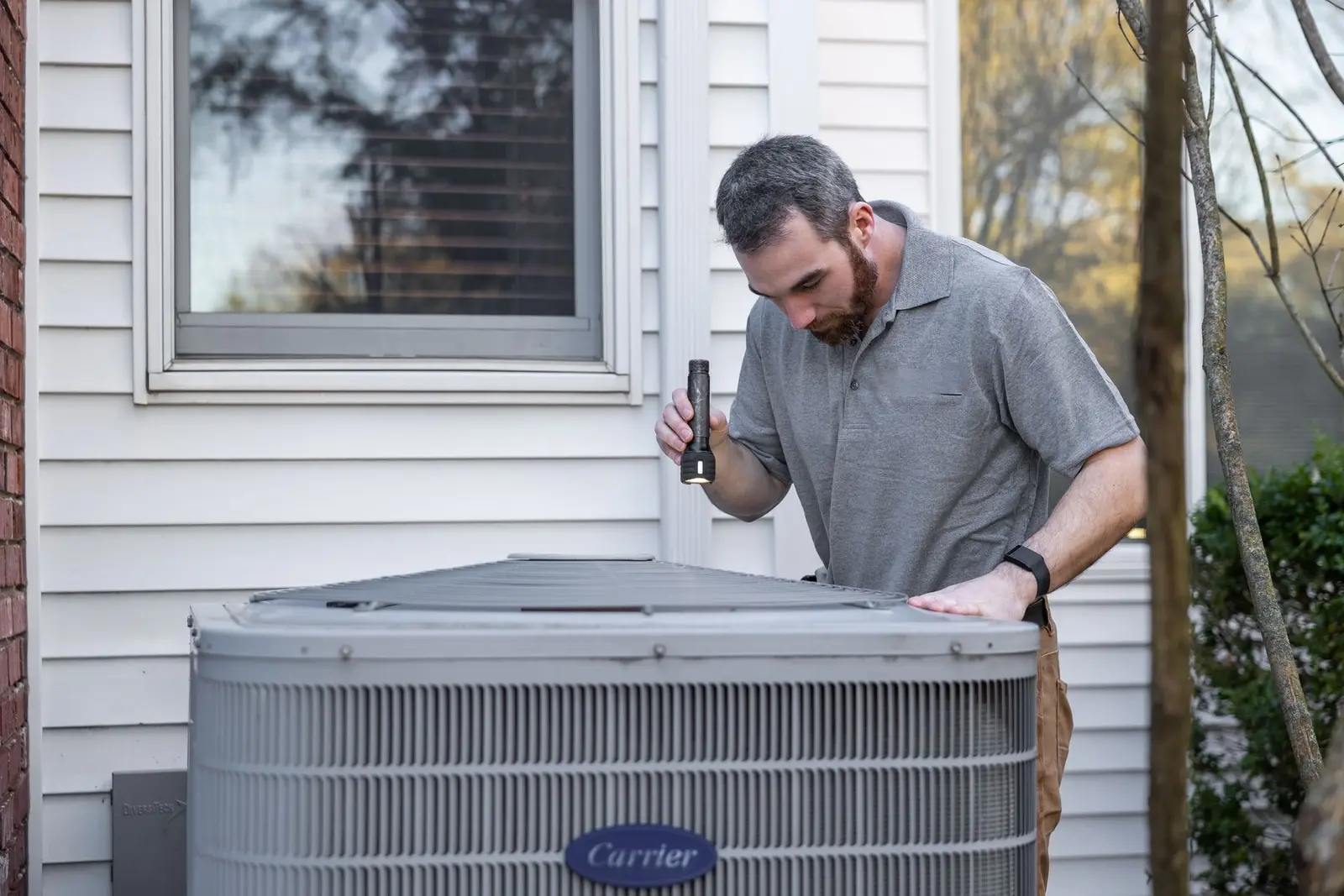
HVAC Google Ads that match a real job
For a US contractor, HVAC Google Ads start with the states and cities dispatch will actually enter. A national keyword list looks busy and buys calls from towns you decline. HVAC search ads should use the same service area the website and the Google Business Profile already publish. If those three disagree, fix the disagreement before you raise the budget.
Start from the phrases a homeowner types, not from a slogan. "No cool", "AC not blowing cold", "furnace repair", "heater will not turn on", and "AC replacement" describe different work. Repair wants a truck. Replacement wants a conversation about the system, often with a second decision maker and a financing question. Maintenance wants a plain explanation of what the visit includes. One ad that says "all your heating and cooling needs" teaches you nothing about which of those jobs the budget bought.
The ad group should follow the job. Cooling repair, heating repair, replacement, and maintenance can each have their own ads, their own landing page, and their own schedule. When the board is full of no cool calls, you can pause repair without also pausing the replacement leads you still have time to quote. A single campaign with one budget hides that choice until the month is already spent.
Brand searches for your company name are a separate, usually cheap, campaign. They are not evidence that non brand repair terms are healthy. Competitor names are a judgment call: some shops bid them, some do not, and the click is often a person comparing reviews rather than a person with a dead furnace. We will not treat competitor clicks as booked jobs.
Seasonality is a budget problem
Cooling demand stacks up when the weather breaks. Heating demand stacks up on the first real cold snap. Shoulder months are quieter, which is when replacement and maintenance have a fairer shot at attention. A flat daily budget all year means June spends itself before lunch and a mild October struggles to spend at all. The shape of the budget should be a decision you make before the season, including what happens when dispatch cannot take another same day call.
A hot week can raise the cost per click because every contractor in the city is bidding. It can also raise the share of people who will book today. Those two facts can cancel each other or compound. You only learn which by reading the calls. We will not paste a return figure from another city onto your account and call it a forecast. Weather is not a strategy, and neither is a chart from a different climate.
An example, labelled as an example: a two truck company might raise the cooling repair budget for a forecast heat wave, cap it on days the board is already full, and leave a smaller replacement campaign running underneath. That is a sketch of how the levers work. It is not a client result, and it is not a prediction of how many jobs you will book.
Local Services Ads and Search are different products
Local Services Ads and standard Search ads can both appear when someone looks for an HVAC company. They are not interchangeable. Search ads are clicks against queries you choose, sent to a page you control. You pay Google for the click. Local Services Ads are a lead unit with their own profile, their own billing, and a screening step Google runs. Many categories ask for a license or a background check. The list of who qualifies is Google's, and it changes.
We will not tell you that your company is eligible, or that it is not, without checking the current category rules for your trade and your location. A failed screen is an eligibility problem. A bid adjustment does not fix a license that does not match what you submitted. If your category is not on the list, Search is the product you can actually buy.
Some companies run both once one of them is stable and the leads are labelled by source. Starting both on the same Monday, with one phone number and no way to tell the calls apart, is how a single conversation gets credited twice. The map pack is a third surface, and it is not either ad product. Ranking there is a separate piece of work.
Negatives for DIY, jobs, and training
HVAC queries attract people who are not hiring a contractor. DIY searches such as how to replace a capacitor, what furnace filter size you need, or a wiring diagram should be negatives unless you deliberately publish that help. Job searches such as HVAC jobs, apprentice, hiring, and salary should be negatives. Training searches such as HVAC school, EPA certification, and course should be negatives. Parts and wholesale searches belong on the list too, unless selling parts is actually the business.
Negatives are a weekly habit. The search terms report is the list of what you paid for, in the words the person typed. A term that spent money and produced a homeowner who wanted a diagram is a negative. A term that looks odd in a spreadsheet but booked a repair stays. We read that report with you. A dashboard that only shows clicks is not a substitute.
Other early negatives are "free", "cheap kit", model number research that never names a service, and career adjacent words like "union" or "journeyman" when the intent is employment. You will still get ambiguous queries. "Furnace" alone can be a homeowner or a student. Match types and the ad copy do some of the sorting. The rest is the search term review, done while the spend is still small enough to learn from.
- DIY and how to queries, unless you mean to answer them
- Jobs, hiring, apprentice, and training or certification
- Parts, wholesale, and equipment for sale without an install
- Free, diagrams, and filter size lookups
- Terms you keep only when a real job shows up behind them
The page, the call, and the two bills
The ad and the landing page have to name the same job. A furnace repair ad that opens on a company history asks the person to start over. The first screen should say furnace repair, show a phone number a person answers, and state the area you actually serve. If the ad says same day, dispatch has to be able to say same day on a cold Tuesday. If you cannot keep that sentence, take it out of the ad. Overpromising is how a fast click becomes a bad review.
Call tracking is how you know the click became a conversation. A number that swaps by campaign, and a record you can open, is the minimum. Form fills matter for replacement quotes. They are a weak proxy for no cool calls, because that person is standing next to a thermostat and will not fill out a form. Count the calls, then listen for whether they were bookable. A long call is not automatically a sold job. A short call can be a booked capacitor if your office is efficient.
There are two bills. Ad spend is paid to Google, the platform. Management is paid to the people who build campaigns, write ads, add negatives, and read calls. Typical management fees are often discussed as a percent of spend or as a monthly minimum, because a small account still needs a search term review and a tiny account does not make that work disappear. That is how the market talks about the work. It is not a CodeHunterz rate card. We quote in writing after we see the site, the offers, and whether calls are already tracked. We do not guarantee a lead count, a cost per lead, or a return.
What do owners in this industry ask?
Q01Do you guarantee a number of HVAC leads?
No. We can structure campaigns around repair, replacement, and maintenance, and we can show you spend, clicks, calls, and forms. How many of those become booked jobs depends on the weather, the crew, the page, and how the phone is answered. A guarantee would be a guess with a contract around it.
Q02Are Local Services Ads the same as Search ads?
No. Search ads send a chosen query to a page you control, and you pay for the click. Local Services Ads are a separate lead product with screening and their own billing. Eligibility depends on Google's current categories and checks. We look that up. We do not invent it.
Q03Which HVAC searches should be negatives?
DIY and how to queries, job and hiring queries, school and certification queries, and parts or wholesale queries, unless you truly sell those. The live list comes from the search terms report each week, not from a template we freeze on day one.
Q04Why does the landing page have to match the ad?
The person clicked a specific job, such as furnace repair or no cool. A general homepage makes them hunt for the phone number and wonder if you do that work. The page should repeat the job, the service area, and a number someone answers. If the promise on the ad is one you cannot keep, change the ad.
Q05Is the management fee the same money we pay Google?
No. Ad spend is paid to Google. Management is a separate fee for the work on the account. In the market that fee is often discussed as a percent of spend or a monthly minimum. This page is not our rate card. You get a written quote after we see the account.
Q06What is HVAC Google Ads management?
HVAC Google Ads management is the ongoing work of search terms, ads, landing pages, schedules, and negatives for a heating and cooling company. It is separate from ad spend paid to Google, and it does not include a promised cost per lead. The written quote comes after we see the site, the offers, and whether calls are already tracked. You can start that conversation on the contact form.