
Contractors / Website design
Contractor website design for the work you build
A contractor site should read like the jobs on your truck, not like every trade in the phone book. Homeowners are trying to learn what you build, where you will drive, whether you are licensed, and how to ask for an estimate without being handed a fake number. Photos of your work answer more of that than a slogan does.
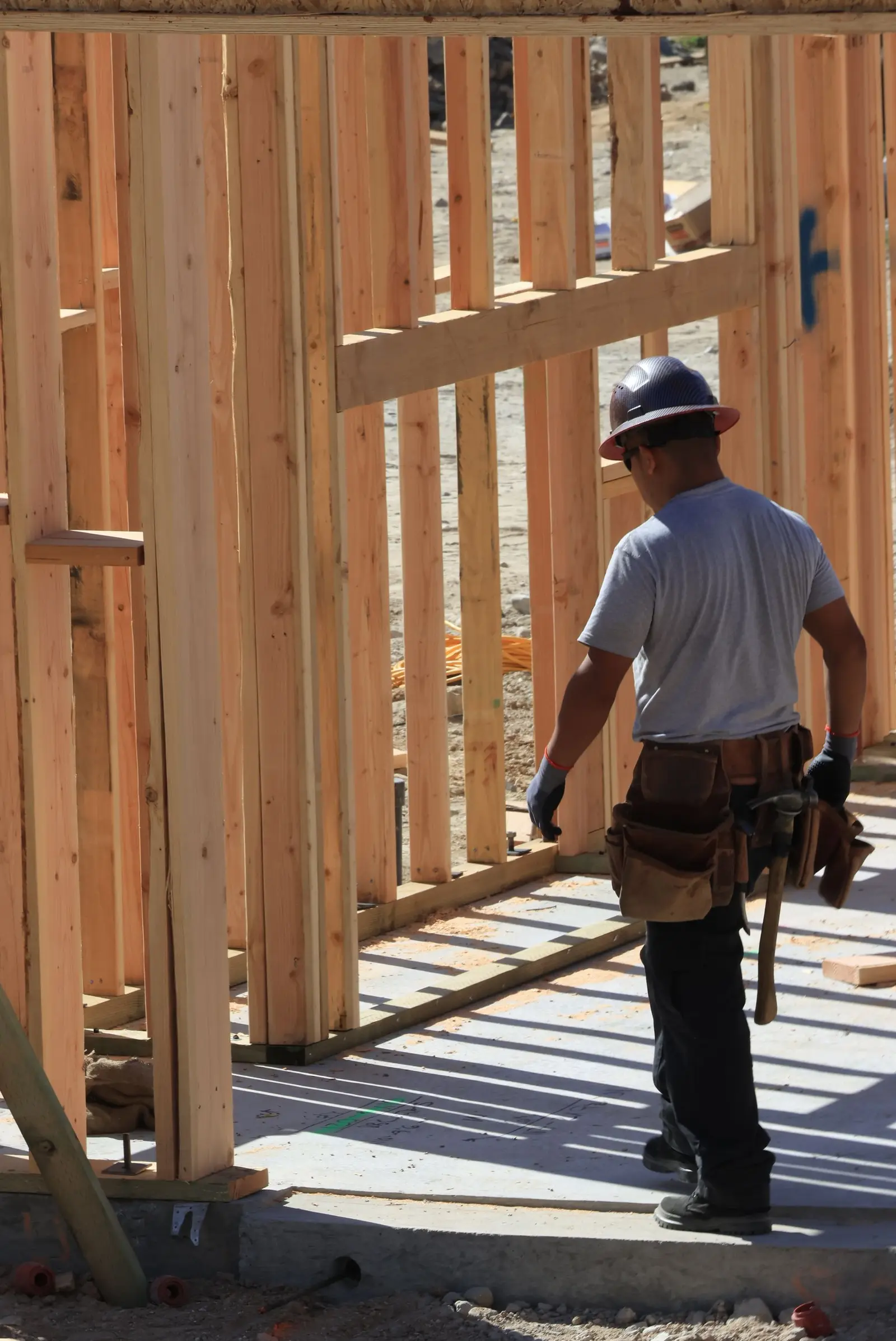
Project types you build, and one service area
The page list comes from work you will stand behind and photograph. Kitchens, baths, additions, roofing, concrete, electrical, whatever is actually on the schedule. A trade you subcontract once a year and do not want calls for does not get a page. Each project page says what you do, what is usually included, and what is outside the job, in language a homeowner can use. If you design and build, say who does the design. If you build from plans someone else draws, say that.
Service area is one section, written as a drive time, a set of counties, or the radius you will honestly keep. It is not a cloned page for every town inside that radius. Those clones are doorway pages, and they are called out again below because we will not build them. The exception is a real second yard, a showroom, or a crew based in another city. That place can have its own page because the facts are different: address, crew, hours.
We ask for the jobs you want more of and the jobs you are tired of. The site follows that list. A homepage that names twelve trades and a crew that can staff three will fill the calendar with the wrong calls. Narrow pages are a favor to the estimator.
- A page for each project type you want to be hired for
- A plain note on work you do not do
- One service area, written as drive time or counties
- A separate location page only for a real second base
- Calls to action that request an estimate, not a made-up price
License lines you can stand behind, and an estimate that is not a price
License and insurance copy is a small page with a high cost if it is wrong. We ask for the wording you want public and for the document behind it. If your state issues a number, the number you approve can sit next to the sentence. "Licensed and insured" with nothing behind it is a line we will push back on. We do not invent coverage limits, bond amounts, or license classes. If a number changes, you need a way to change the page, and we will show you that field.
The estimate request collects what an estimator needs for a first look: project type, city, a short description, photos if the homeowner has them, timing, and a phone number. The thank-you text says a person will follow up. It does not display a price. An instant calculator that invents a kitchen number from three dropdowns is how you get a homeowner who thinks the figure was a bid. If you have a real flat rate for a tightly defined small job, that rate can be published because you will honor it. Everything else waits for a person.
The form should say what the next step is in time you can keep, such as a call within one business day. During a busy season that sentence may need to change, and the page should let you change it. We would rather show a slower true reply than a fast one you miss.
- License and insurance sentences matched to documents you approve
- No invented limits, bond amounts, or license classes
- Estimate fields: project type, place, photos, timing, phone
- A person prices the work after the request
- A flat published price only for a defined job you already sell that way
Galleries of jobs you actually did
The gallery is your jobs. Before and after is welcome when both photos are the same project and you have the homeowner permission you are comfortable with, especially if the house is recognizable. Captions name the work and, if you want, the city. They do not name a slogan. We do not drop a stock kitchen into a remodeler site and call it a recent project. People who hire from the photos expect those details in their house.
Organize the photos by project type so a bath lead is not paging through roofs. A short note on what the crew did is more useful than a filter full of adjectives. If a project was a repair rather than a full remodel, say so. Accurate scope in the caption protects the estimate later.
If your photos are uneven, we use the true set you have and tell you what to shoot on the next job: the existing condition, the work in progress if it helps, and the finished room in daylight. We do not invent the missing frames. A thin true gallery can go live. A thick fictional one cannot.
What we will not put on a contractor site
Fake reviews stay off the site. We will not write homeowner quotes, invent a street name, or build a five-star row that your crews did not earn. If you have real reviews on a profile you control, we can link to them. The words still have to be theirs.
Doorway city pages stay off the site. "Remodeler in" every town inside the drive time, with the same three paragraphs, is the pattern we will not build. One service area section covers the geography. A second page appears only when you have a real base there. Maintaining fifty thin URLs does not win better jobs, and it creates a ranking risk you do not need.
Guaranteed rankings stay off the site. We will not promise the map pack, page one for a trade plus a city, or a number of estimates. The build is the project pages, the license line, the estimate path, and the real photos. Position in search is not something the design includes. We also will not add "as seen on" marks you cannot document.
An example, not a case study
Example, not a case study, and not a client result. Picture a design-build remodeler that does kitchens and baths and does not do roofing. The site has two project pages and a short note that roofing is referred out. The service area is a 45-minute drive from the shop, written once. There is no page for each town inside that drive. The license number on the site is the number on their card, and they approve the insurance sentence against the certificate.
The estimate form asks for project type, city, photos, and a phone number. The thank-you says someone will call to set a visit or to ask for what the photos do not show. No price appears. The gallery is twelve of their jobs, captioned as kitchen or bath and the city. Two stock images that were on the old site come off.
That is the workflow: choose the project types, write one service area, publish only license language they can stand behind, let a person price the job, and show their photos. The example is not a claim about leads, close rate, or rankings.
What do owners in this industry ask?
Q01Can the site show an instant project price?
Only for a defined flat-rate job you already honor. For remodels and other scoped work, the form collects the project and a person prices it. A calculator that invents a number is not an estimate.
Q02Will you build a page for every town we serve?
No. The service area is one honest section, as a drive time or a list of counties. A cloned page per town is a doorway page. A real second shop or crew base can have its own page.
Q03How do you handle license and insurance wording?
You approve the sentence, and it should match a document you can produce. We do not invent license numbers, classes, or coverage limits. If the number changes, the page has to change with it.
Q04Whose photos go in the gallery?
Yours, from jobs you did. We ask about homeowner permission when a house is recognizable. We do not use stock projects or another company's photos. A smaller true set is the right launch.
Q05Do you guarantee first-page rankings for contractor searches?
No. We will not guarantee rankings or a number of jobs. We will not publish fake reviews to make the site look busier. The pages cover the work you do, the area you cover, and a real way to request an estimate.